Delay the smartphone. Not the independence.

Yado is a small device for kids who are just starting to go places on their own. No screen, no internet, no social media, just a button. One touch and they can talk to you. Always know when they arrive. Allow them that extra freedom without the worry.

Smart without the phone.

Screen-freeSelect contactsSchool compatible

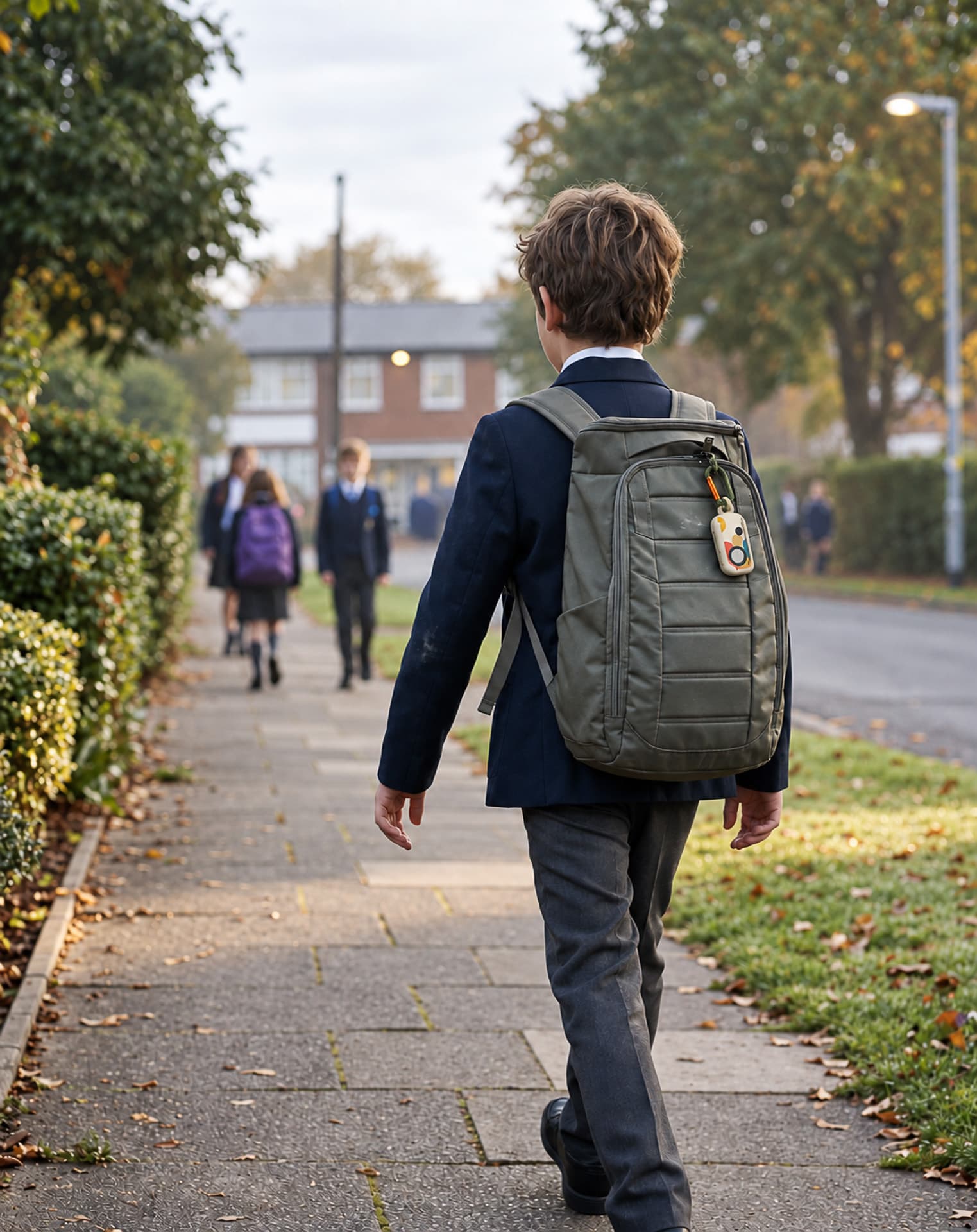
A boy in school uniform walking to school on his own, a small Yado device clipped to his backpack strap.
How it works

A small device for them.

No smartphone, no feed: just a simple line home.

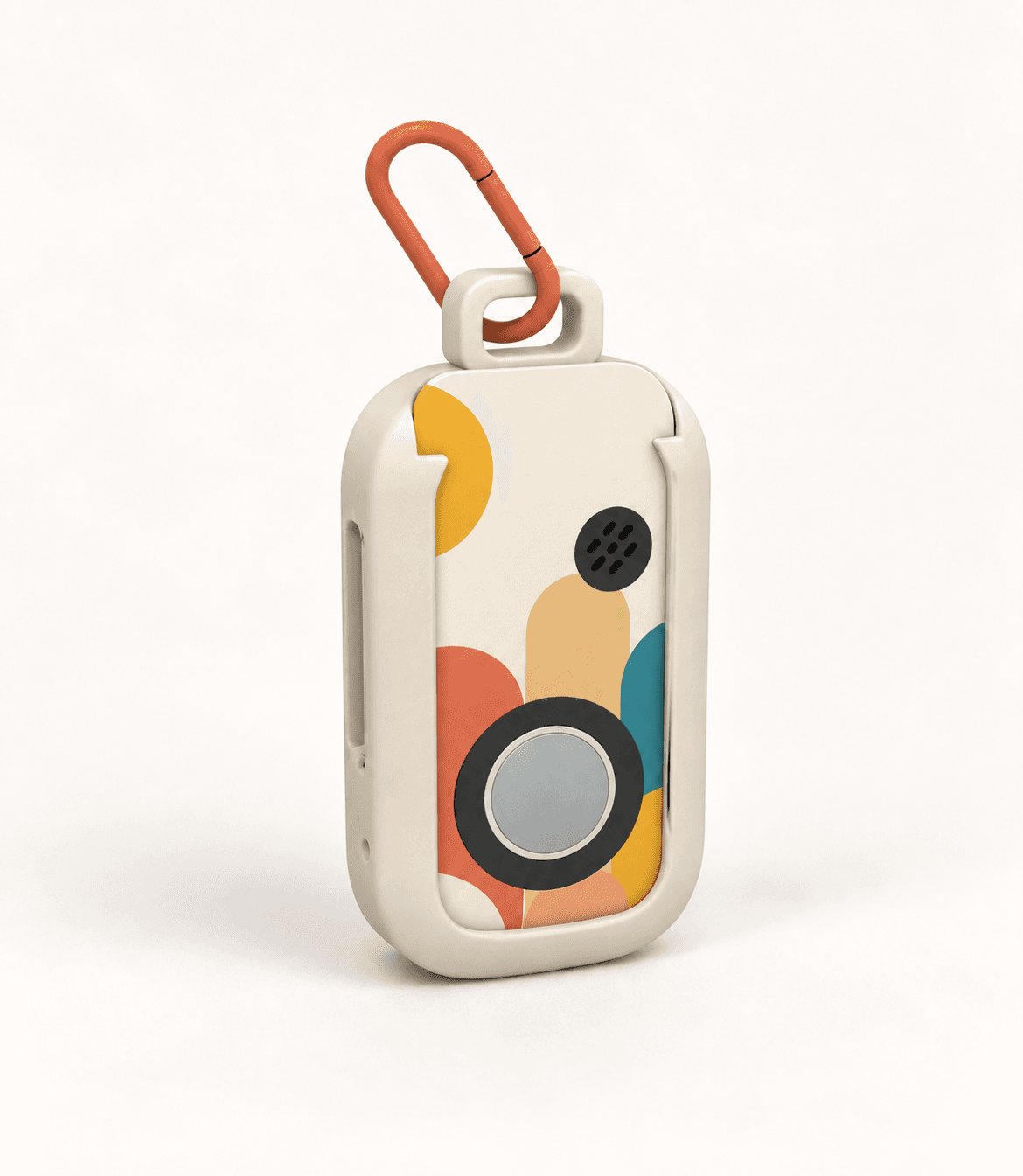
The Yado device: a small rounded rectangle with one large circular button on the front, two keys on the side, a speaker grille, and a carabiner clipped through the loop on top.
Just three buttons - nothing else
  • A smart keyring, not a phone

    No screen, nothing to scroll.

  • You know they got there

    With a simple notification on your phone.

  • And you can still call them

    And they can call you.

A versatile app for you.

An app that keeps you in the loop.

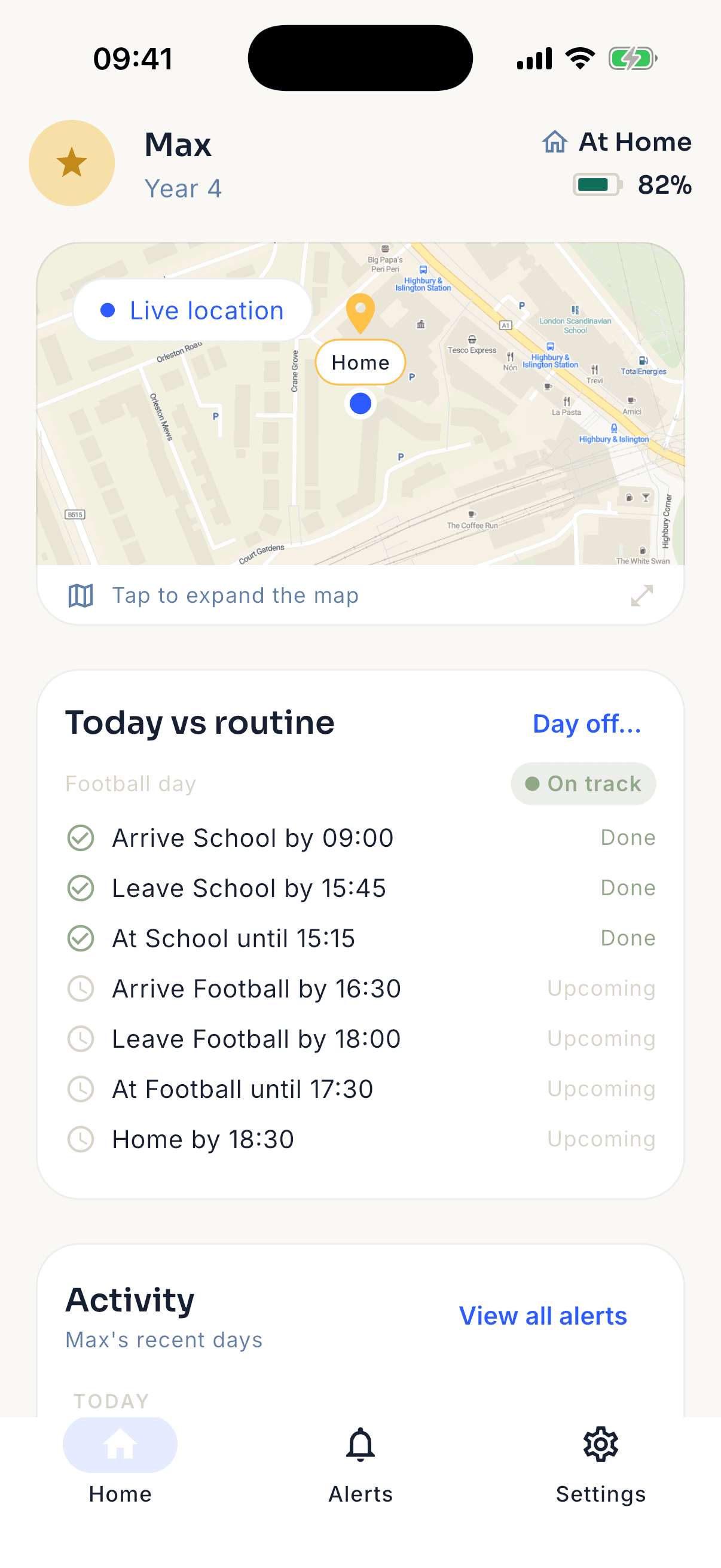
The Yado app home screen showing a live map with the child's location, a Home marker, and recent SOS activity.The daily timeline at a glance
  • Set locations

    Mark the places that matter on a map. Know the moment they arrive or leave.

  • Daily routines

    Set the daily routines for the week. Yado keeps track of where they should be.

  • Every child, one view

    Multiple children and homes, held together in a single app.

  • Smart alerts

    Worried about missing their call? You can set up to 6 contacts. And you will get notified in the app.

Waitlist

Yado goes on sale in spring.

Get your hands on the first batch by signing up here:

  • Be the first to receive a Yado
  • Have a say in the colours and accessories we make next
  • Receive progress updates

You can unsubscribe at any time. Privacy policy.

What you said

We asked parents what actually worries them.

Not the headlines, the ordinary Tuesday stuff. Here are four of the answers we heard most, and what Yado does about each one.

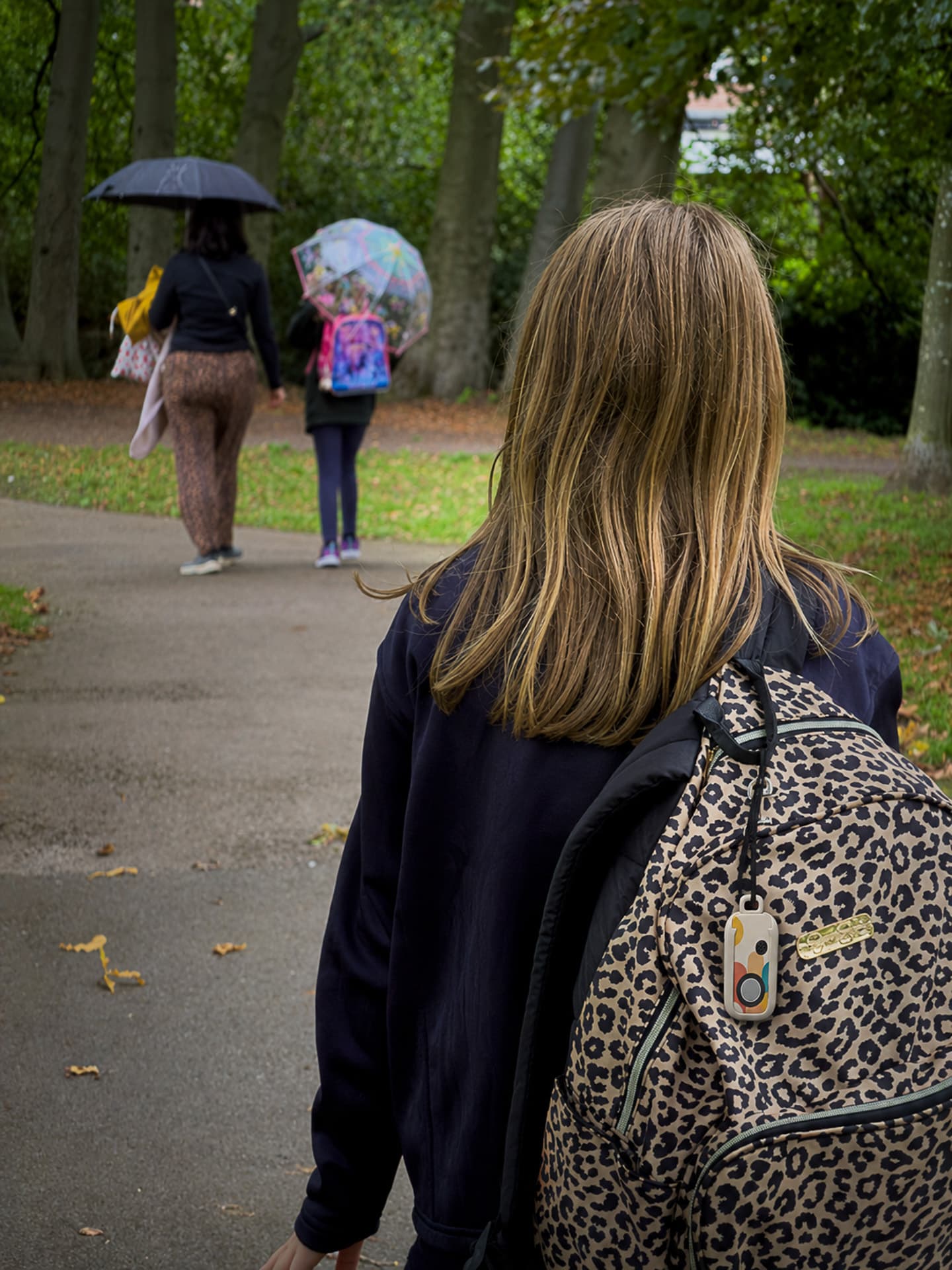
A girl with a backpack walking through a school side gate on her own in the morning.
Did she get there?

Freya walks the last half-mile.

Freya is nine. Since September she's walked the last stretch to school by herself: past the postbox, over the crossing and in through the side gate.

Her mum is at her desk by 8.40, and she doesn't want to follow a dot on a map. She wants one line: she's there.

If Freya hadn't arrived, her school wouldn't ring home until 10. That's an hour and twenty minutes of not knowing — and it's the reason a lot of parents are still doing the walk themselves.

Yado

Freya arrived at school · 8:34

How it works

A message at 8.34, and nothing else. You don't have to go looking. Yado tells you when they arrive.
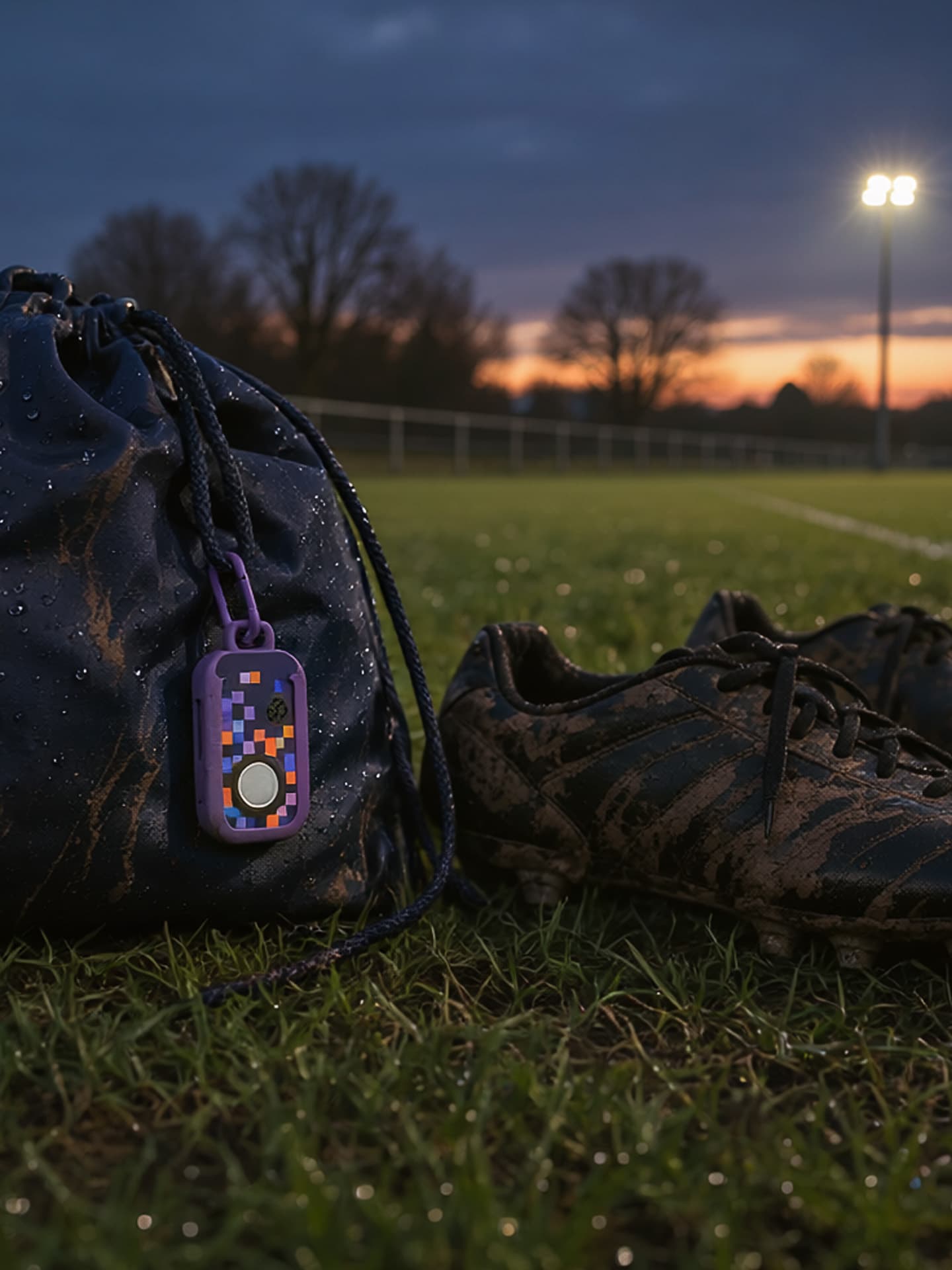
A kit bag and muddy football boots beside a floodlit pitch in the rain, with a Yado device clipped to the bag.
What if I miss the call?

Noah's training finishes early.

It's raining, the coach calls it at half six instead of seven, and Noah is ten years old on a dark touchline with forty minutes to fill.

He presses the button once.

It rings his mum, who's in a meeting with her phone face-down. Ten seconds later it rings his dad, who's driving. Then it rings Nanna, who picks up on the second ring and is there in twelve minutes.

Noah pressed his button · 18:29
  • MumNo answer
  • DadNo answer
  • NannaAnswered · 18:31
How it works

One call starts at the top of your list and keeps going until a real person answers. And everyone with the app gets notified.

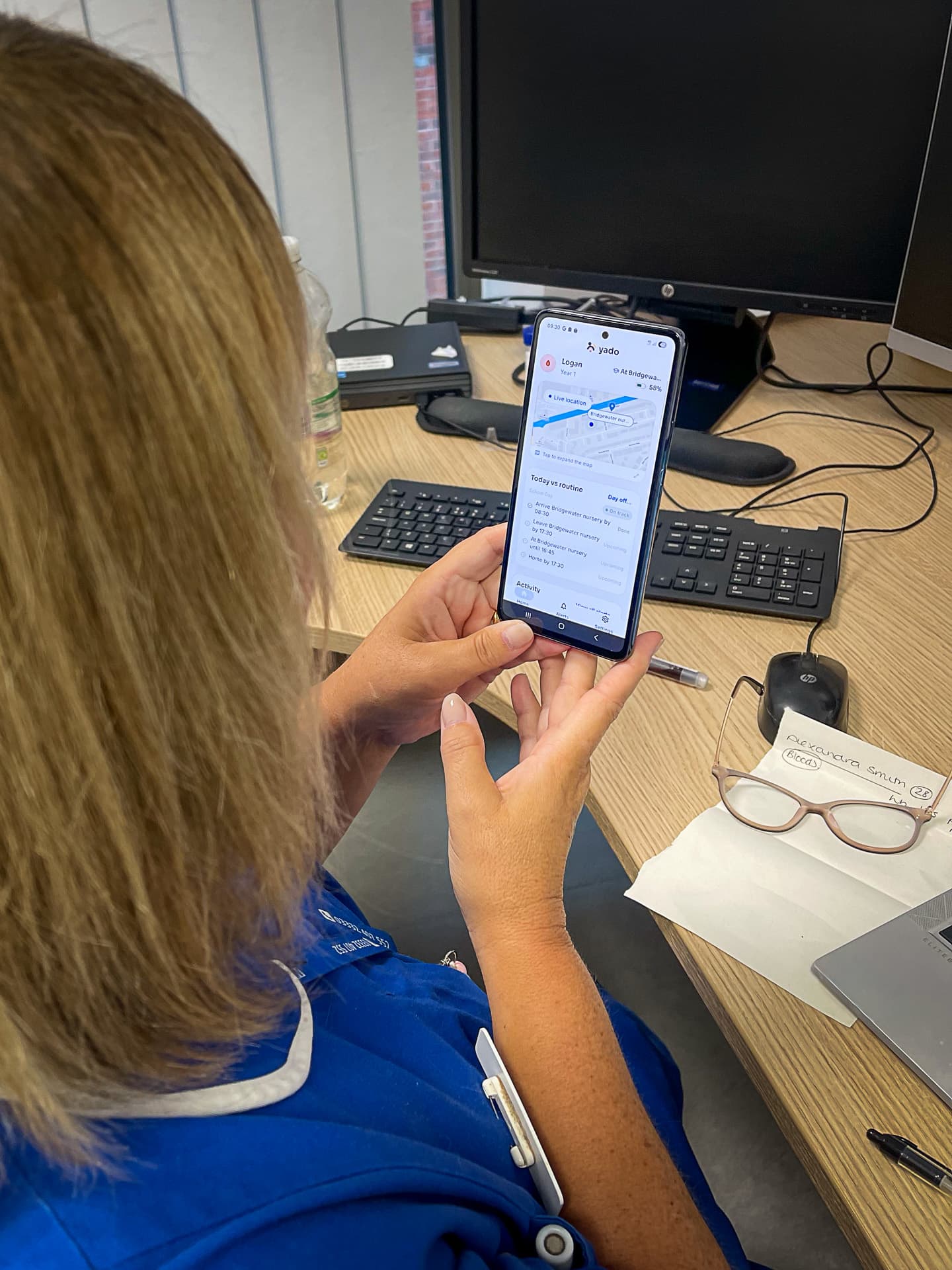
A nurse on her break looking at the Yado app, which lists the day: left home, arrived at school, left school, arrived at her friend's house.
I can't be on my phone all day

Sarah is on shift.

Sarah's a nurse. Her phone is in a locker from seven in the morning. Her daughter Mia goes to a friend's house after school on a Wednesday, and Sarah spends the day with a small part of her attention worrying about Mia.

She doesn't want a dot on a live map. She couldn't look at it anyway. She wants to come off shift, open her phone, and see that the two things that were supposed to happen, happened.

15:35, left school. 15:47, arrived at her friend's house. Nothing else needed her today.

How it works

Yado does the checking, so you don't have to. Set the places and the times that matter, and it tells you if something doesn't go to plan.

Two girls at a bus stop: one sitting looking down at a smartphone, the other walking off ahead with a Yado clipped to her bag.
Everyone else has a phone

Ella wants to go on her own.

Her best friend got a phone in Year 5. What Ella actually noticed wasn't the phone. It was that her friend started walking to school by herself. Going to the shop on a Saturday. Getting the bus into town.

Ella wants that. Not the phone, the independence.

And she's ready for some of it. She isn't ready for the internet in her pocket, or a group chat at ten o'clock at night, or being reachable by anyone who gets hold of her number. She needs a few more years of the real world first.

A phone is how her friend's parents said yes. It doesn't have to be how you say yes.

How it works

Yado gives her the independence. There's no screen, nothing to scroll, and no internet. The number is closed: only the people you add can reach her.

Where to start

Two guides, whichever side you're on.

Straight answers

The things parents ask us first.

What will it cost?

The device is £80, and plans start at £6.99 a month. Founding families in our pilot use Yado free while they help us shape it, and you'll know exactly what your plan includes before you commit to anything.

Is Yado a GPS tracker?

Yado has GPS, and the app tells you when your child arrives at the places you set. What makes it different is that your child can call you. One button rings the people you choose, one after another, until someone answers.

See how Yado compares with other GPS trackers for kids

Isn't this just tracking my child?

It can show you where the device is, but most families don't use it that way. What they want is a way for their child to call home, and a message when they arrive. If you'd rather not see location at all, you can turn it down. Plenty of parents only want the arrival alerts.

Who can call it?

Only the people you add. Everyone else is blocked by default: a wrong number, a cold caller or someone who got the number from a friend is turned away by the network before the device rings.

Will the school let them bring it in?

Set school hours and it stays silent through lessons. There's no screen, so there's nothing to fiddle with under the desk, and it sits in the bag until home time. We're writing a short explainer you can hand to the school office.

What if nobody on the list answers?

There's an optional 24/7 response centre that picks up when your contacts can't. It's for families who don't have six reliable adults to put on the list, and it's up to you whether you add it.

What happens when they're old enough for a phone?

They can move to a basic phone, or eventually a smartphone. You can stop using Yado at that point, or keep it alongside the phone: its location reporting is much better than a normal phone's, and so is its coverage.

The reception where we live is really bad. Will it work?

Yado is designed for areas with poor reception. Instead of a standard SIM tied to one provider, it uses a multi-network SIM that switches to whichever network has the strongest signal.

Small things that turn out to matter

Silent during lessons

Set school hours and it goes quiet, so it stays in the bag and out of a teacher's day.

It survives a phone ban

Grounded from the phone but still has to get to dance? Send the Yado.

You choose how much you see

Some parents want arrival alerts and nothing else. That's a setting, and it's yours.

If you run out of people to call

An optional 24/7 response centre, for families who don't have six reliable adults on a list.

About us

Three of us. All parents.

All people who build technology for a living, two of us in safety-critical settings. The default answer for children has been to give them a smartphone. We didn't think that was good enough, so we're building something different.

Read our story
  • Portrait of Lex SmithLex SmithCo-founder | Product and Design
  • Portrait of Sean WestgateSean WestgateCo-founder | Business & Technology
  • Portrait of Ste SmithSte SmithCo-founder | Engineering and Design
The pilot is running

Fifty founding families. There are still places.

We started this term with a small group of families using Yado every day, telling us what works and what doesn't. A few devices are still unclaimed, for families in the UK.

  • A device and the app, set up with you, not posted with a leaflet.
  • A direct line to us — you'll be talking to the people who build it.
  • A say in what comes next — colours, accessories, and which features get built first.
  • One thing from you: use it properly, and tell us the truth about it.

No device details, no address, and nothing about your child beyond the school year they are in.